villa sorgente
Gilles&Boissier restores the splendour of this Florentine residence, once part of the Gucci family heritage. Between Tuscan architecture, raw materials and Roberto Ruspoli’s monochrome fresco, the house is reborn through a light architectural language where tradition and movement quietly converse
florence, italy
villa sorgente
Gilles&Boissier restores the splendour of this Florentine residence, once part of the Gucci family heritage. Between Tuscan architecture, raw materials and Roberto Ruspoli’s monochrome fresco, the house is reborn through a light architectural language where tradition and movement quietly converse.
florence, italy
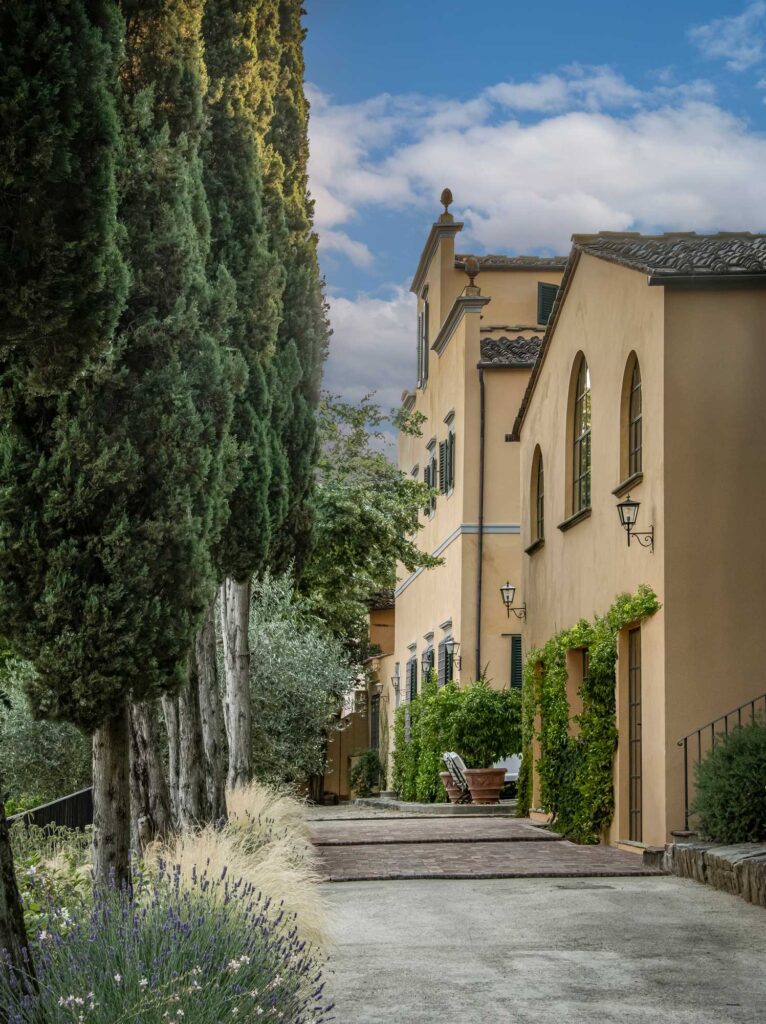
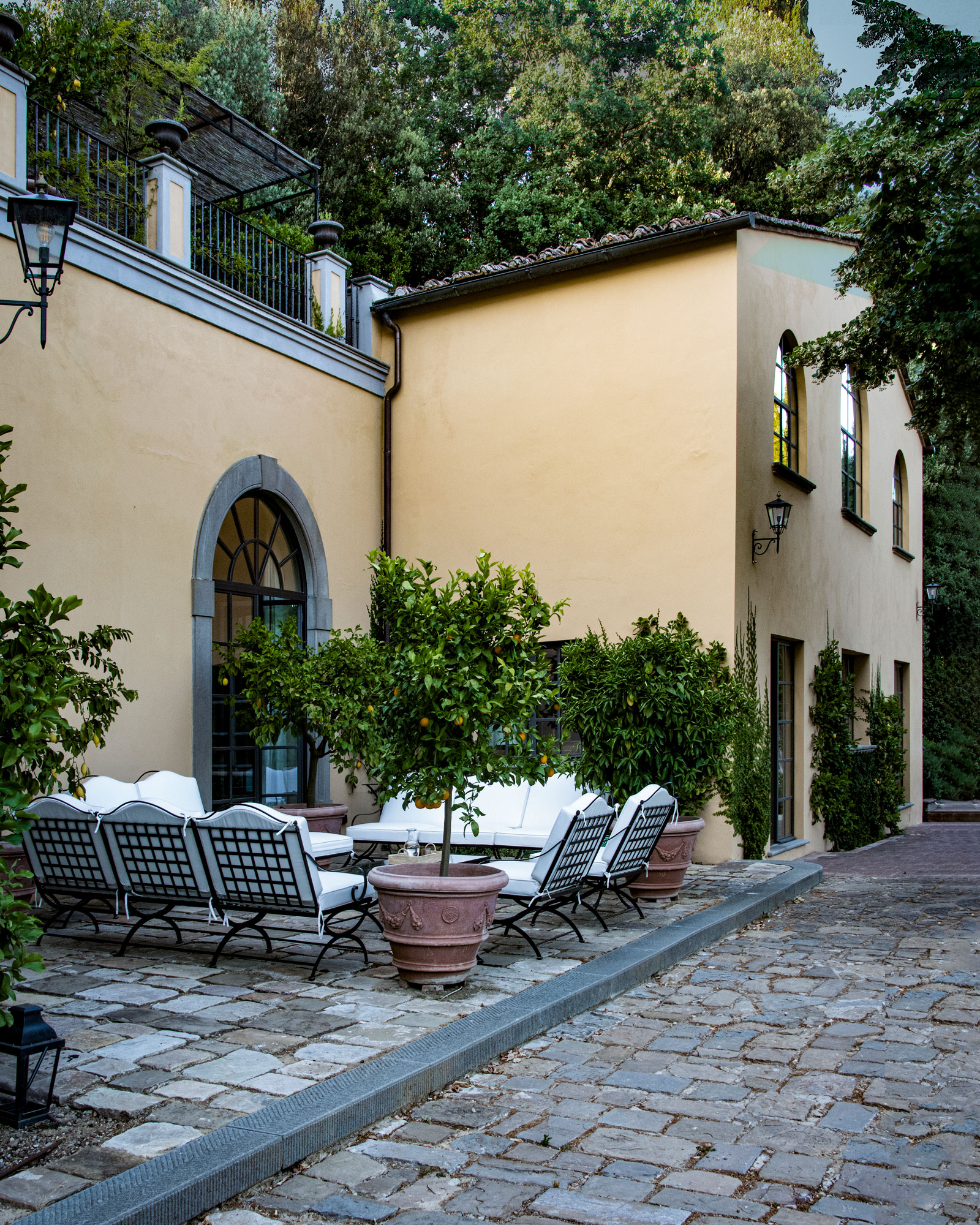
Nestled in the lush hills overlooking Florence, Villa Sorgente appears as a residence suspended between memory and renewal. Once a holiday home of the Gucci family, the property has been entirely reinterpreted by Gilles&Boissier for collector Grégory Marciano, rediscovering the quiet elegance of the great Tuscan villas.
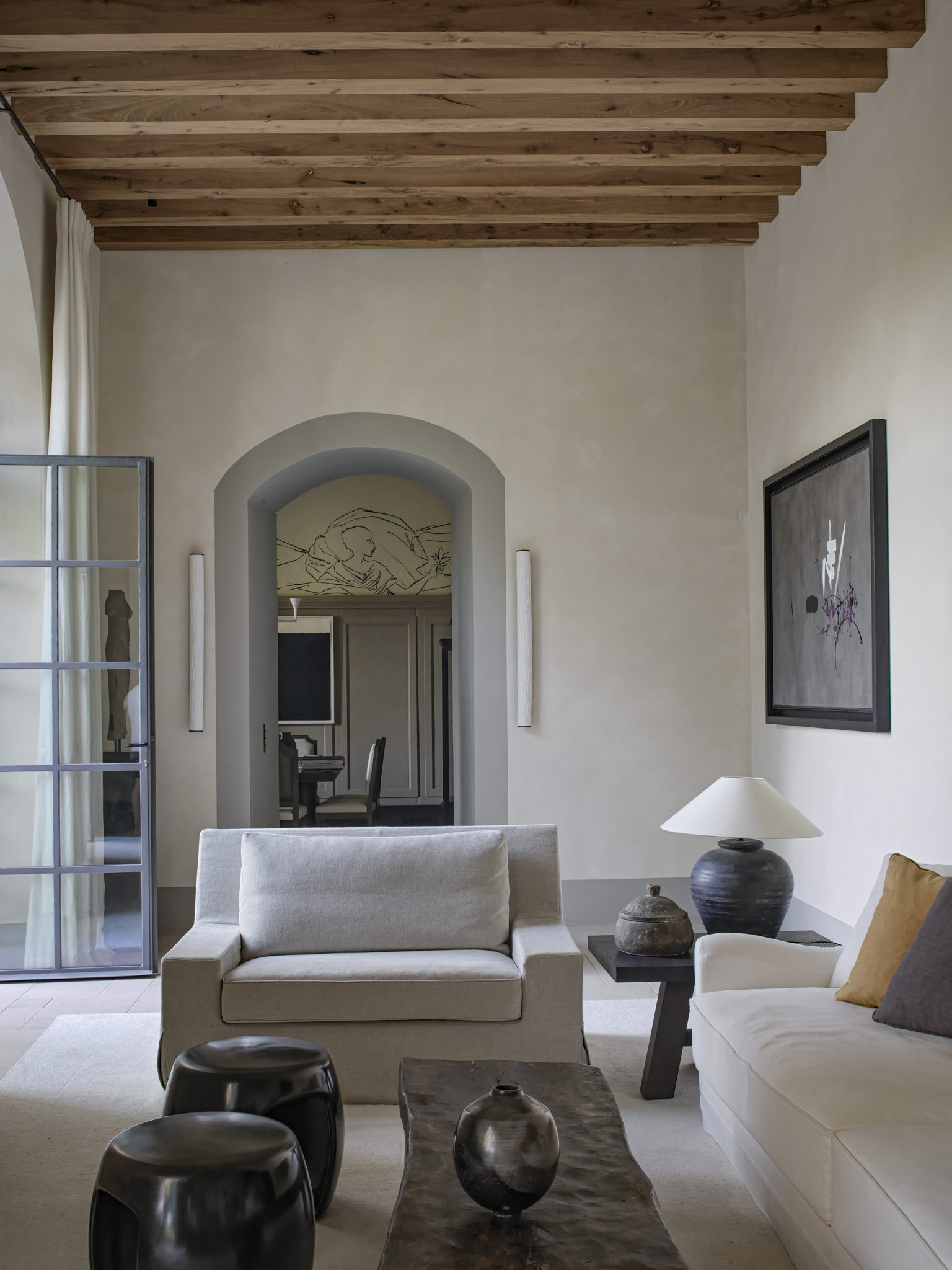
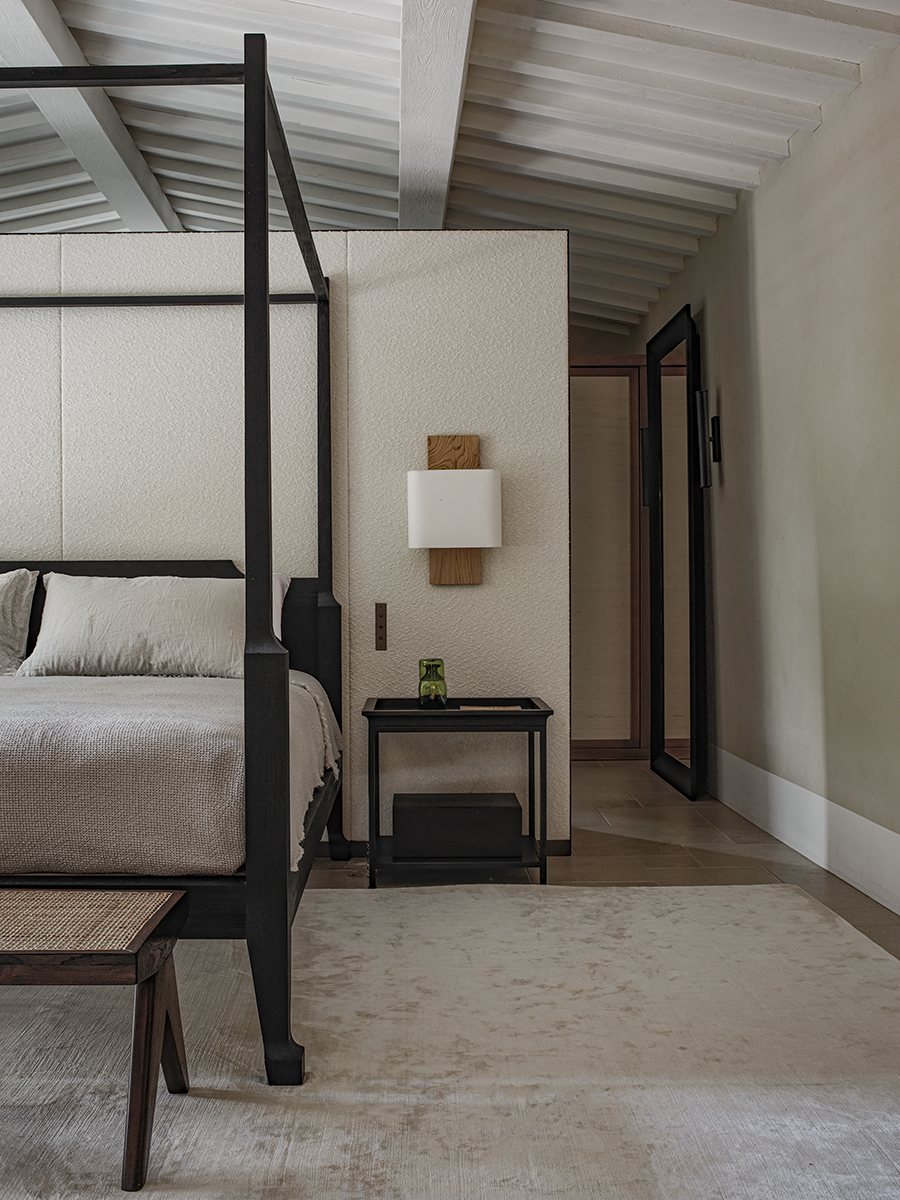
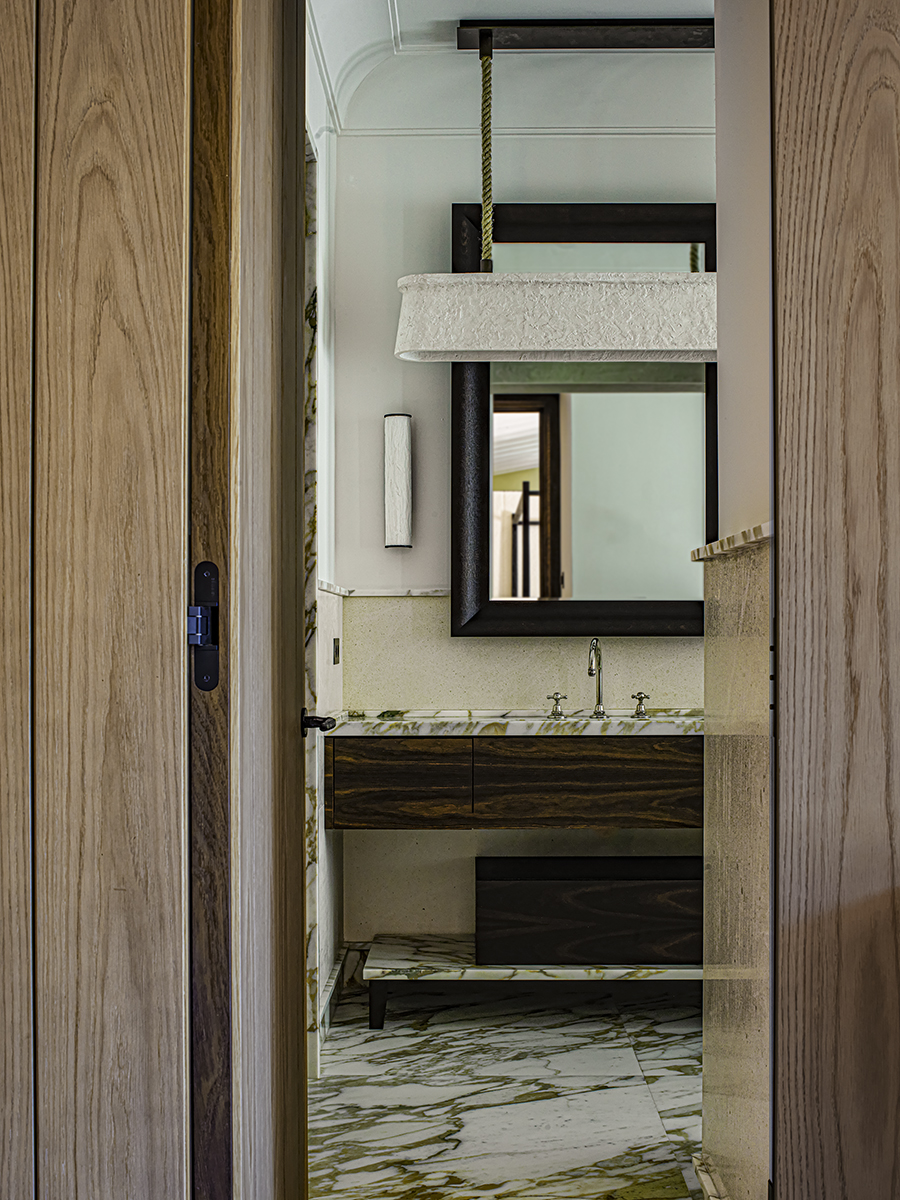
Long dormant, the house is reborn through an interior language that privileges the simplicity of volumes and the precision of materials. Stone floors laid in opus romano, stucco walls, pale travertine and mineral plasters compose an almost timeless vocabulary, where every surface reveals the hand of the artisan. The palette – soft and powdery, with greys, beiges and patinated whites – creates a calm atmosphere, allowing light and proportion to define the space.
In the dining room, a singular element animates the architecture: a monochrome fresco conceived by the artist Roberto Ruspoli. Running along the walls, its graphic figures seem to glide around the room like an allegory of movement. Both discreet and vibrant, the work accompanies the historic fireplace and lends the space an almost choreographic rhythm.
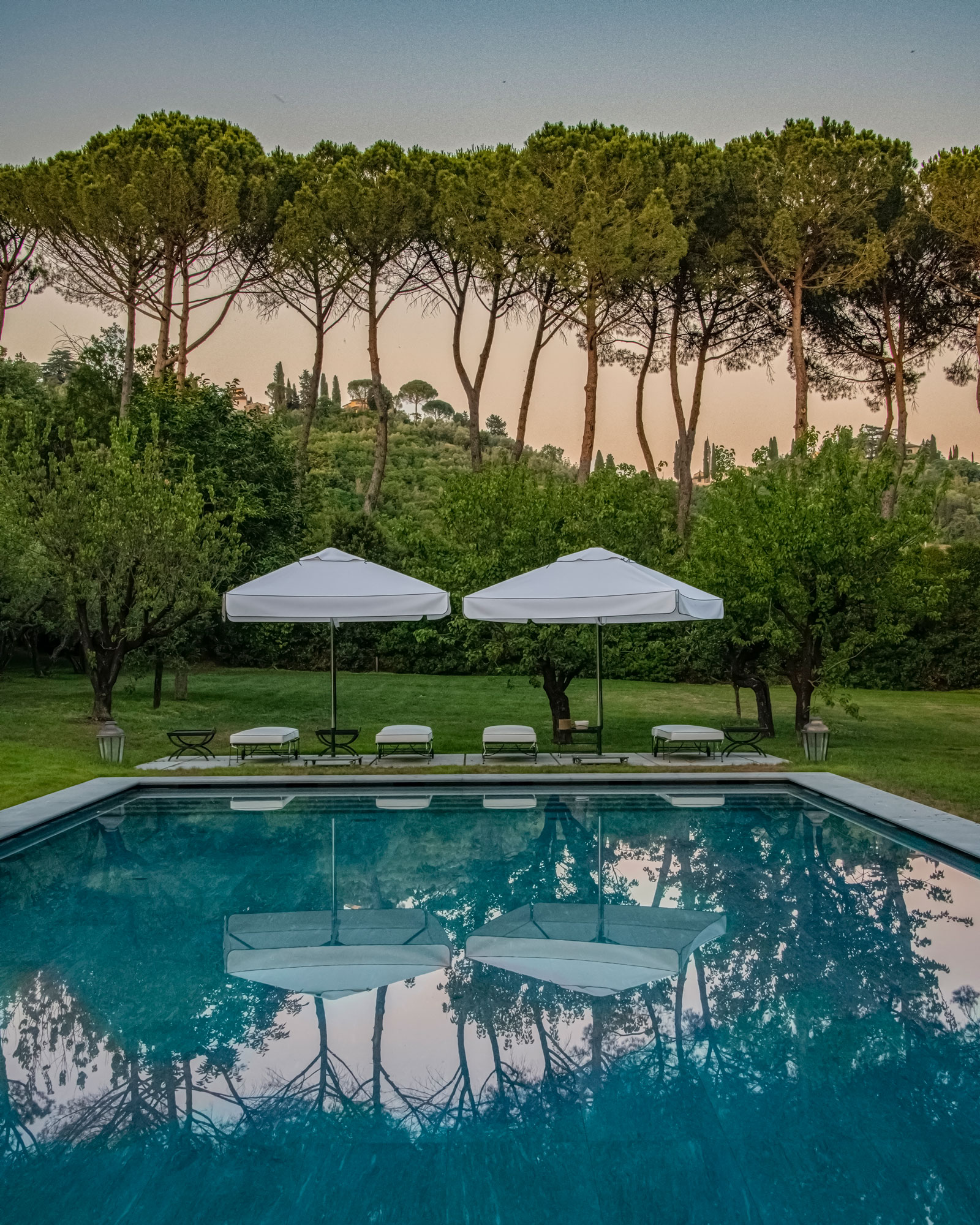
Throughout the villa, contemporary art, bespoke furniture by Gilles&Boissier and antique pieces create a subtle dialogue between eras. The house opens widely onto the Tuscan garden — cypresses, olive trees and lavender — naturally extending the interiors into the landscape.
More than a restoration, Villa Sorgente becomes a quiet renaissance: a home where architecture, art and material reinterpret the spirit of Florence with deeply inhabited elegance.
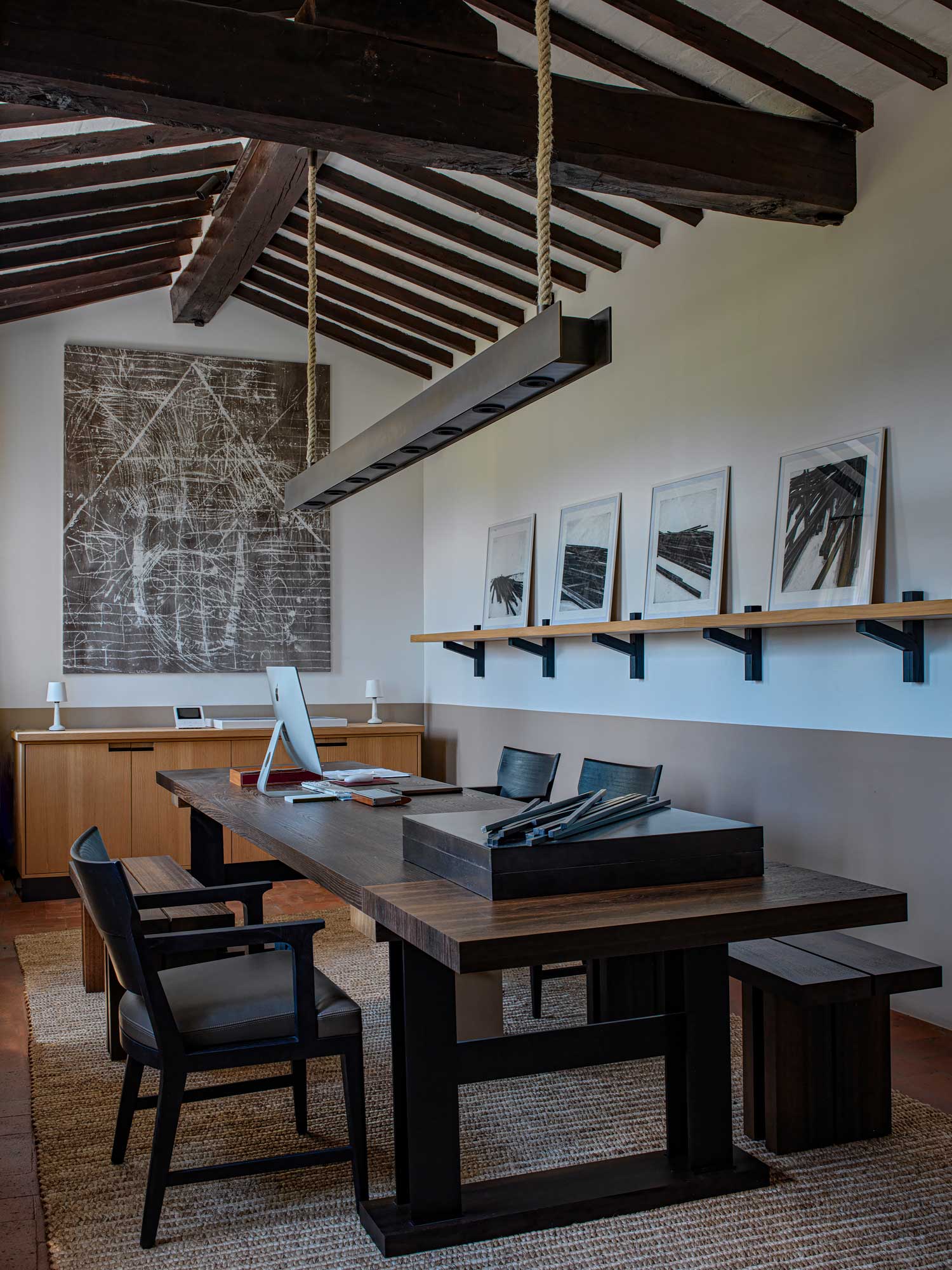
"Our aim was to renovate it in such a way that it would look like we had done nothing; as if the interiors had always existed as they appear today."
Patrick Gilles


Fonctionnel Always active
Préférences
Statistiques
Marketing
step into our world

Receive our exclusive news*, our emblematic projects and our design inspirations. Each newsletter is an invitation to explore our art of living in the French way and our constant quest for refinement.